-
New in
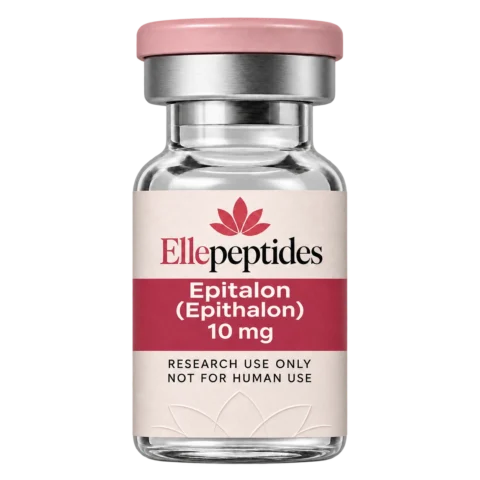
Epitalon (Epithalon)
Epitalon (Epithalon) is a synthetic tetrapeptide, Ala-Glu-Asp-Gly, studied for telomerase activity and aging biomarkers in cell…
- Healthy Aging & Energy
- Peptides for Women
-
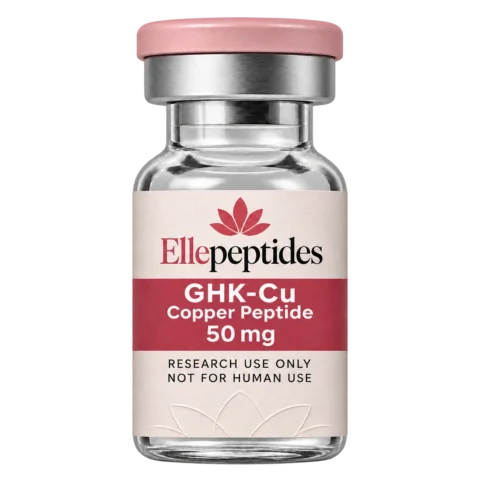
GHK-Cu Copper Peptide
GHK-Cu, the copper(II) complex of the tripeptide glycine–histidine–lysine, supplied as freeze-dried research material in 50 mg…
- Healing & Recovery
- Peptides for Women
-
New in
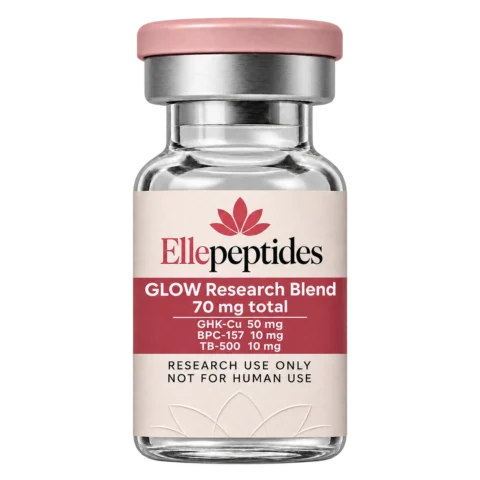
GLOW Research Blend (70 mg)
GLOW is a 70 mg freeze-dried research blend: GHK-Cu 50 mg, BPC-157 10 mg and TB-500…
- Peptide Blends
- Peptides for Women
-
New in
Kisspeptin-10
Kisspeptin-10 is a ten-residue KISS1R (GPR54) agonist studied for its control of LH and FSH release,…
- Peptides for Women
- Research Peptides
-
New in
NAD+
NAD+ is the oxidized form of nicotinamide adenine dinucleotide, a coenzyme rather than a peptide, studied…
- Healthy Aging & Energy
- Peptides for Women
-
New in
Oxytocin
Oxytocin is a nine-amino-acid cyclic neuropeptide hormone that acts on the oxytocin receptor, studied in labor…
- Peptides for Women
- Research Peptides
-
New in
PT-141 (Bremelanotide)
PT-141 (bremelanotide) is a cyclic alpha-MSH analog studied at melanocortin receptors, best known from placebo-controlled trials…
- Peptides for Women
- Research Peptides
-
New in
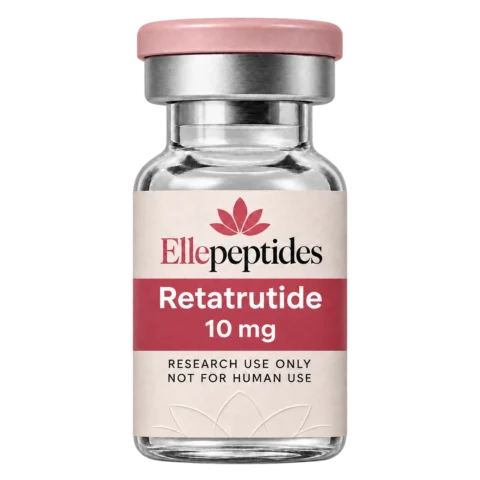
Retatrutide
Retatrutide (LY3437943) is a triple GIP, GLP-1 and glucagon receptor agonist peptide, supplied as freeze-dried powder…
- Peptides for Women
- Research Peptides
-
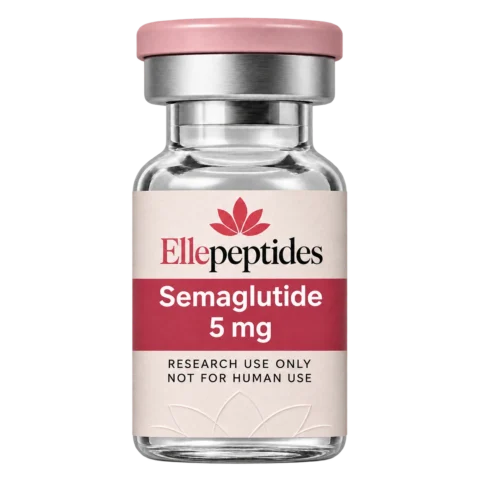
Semaglutide
Semaglutide is a long-acting, lipidated GLP-1 analogue peptide, supplied as freeze-dried powder in 5 mg, 10…
- Peptides for Women
- Research Peptides
What “peptides for women” means at Ellepeptides
This women-focused hub collects the research compounds whose literature includes women, with the enrollment numbers attached. It does not claim that any peptide works differently, better or more safely in women. A trial that enrolled women tells you who was measured; it does not create a women-specific indication, and none of the findings below describe the research vials sold here.
Peptides with published studies involving women
Each row gives the women-involving evidence our product pages cite and its main limit. Where we found nothing, the row says so.
| Compound | Research area | Studies involving women | Main limit |
|---|---|---|---|
| PT-141 (Bremelanotide) | Sexual desire (melanocortin signaling) | RECONNECT randomized 1,267 premenopausal women with hypoactive sexual desire disorder (Kingsberg et al., 2019); a 2006 crossover enrolled 18 premenopausal women (Diamond et al.) | Desire and distress scores favored bremelanotide; satisfying sexual events did not differ significantly |
| Kisspeptin-10 | Reproductive-hormone signaling | 35 women and 11 men across hormone-response experiments (Jayasena et al., 2011) | Response depended on menstrual-cycle phase; no pregnancy outcomes measured |
| Oxytocin | Sexual function; social behavior | Crossover trial in 30 premenopausal and postmenopausal women with sexual dysfunction (Muin et al., 2015) | Scores improved in both oxytocin and placebo periods, with no significant difference |
| GHK-Cu Copper Peptide | Skin matrix and wrinkles | 40 women aged 40–65 in an 8-week split-face study; 39 completed (Badenhorst et al., 2016) | Small study of formulated products, not research powder |
| GLOW Research Blend (70 mg) | Three-component skin-research blend | No study of the blend; women’s evidence exists only for its GHK-Cu component | Component data cannot describe the mixture |
| SNAP-8 (Acetyl Octapeptide-3) | Cosmetic wrinkle research | The SNAP-8 patch study gives no verified sex breakdown (2024 report); the related Argireline study used women volunteers (Blanes-Mira et al., 2002) | Argireline is a different peptide |
| Semaglutide | Obesity and cardiometabolic research | Women were 74.1% of 1,961 STEP 1 participants (STEP 1 investigators) | Results are pooled, not women-specific |
| Tirzepatide | Obesity and type 2 diabetes | Women were 67.5% of 2,539 SURMOUNT-1 participants (SURMOUNT-1) | Results are pooled, not women-specific |
| Retatrutide | Obesity and type 2 diabetes | 163 women in the phase 2 trial (Jastreboff et al., 2023); 554 in TRIUMPH-2 (2026); 296 of 537 in TRANSCEND-T2D-1 (Bajaj et al., 2026) | Phase 2 subgroup found greater percentage weight reduction in women than men |
| NAD+ | NAD metabolism | Two women among six NAD+ recipients in a retrospective clinic study (Reyna et al., 2026); a precursor trial enrolled 25 postmenopausal women (Yoshino et al., 2021) | The precursor, NMN, is not NAD+; the NAD+ group was tiny |
| Epitalon (Epithalon) | Telomerase and aging models | No study in women identified; the aging experiment used female mice (Anisimov et al., 2003) | Evidence gap |
Desire and reproductive-hormone research
Bremelanotide (PT-141) has the largest women-only evidence base in the catalog. In RECONNECT, 1,267 premenopausal women with hypoactive sexual desire disorder were randomized; at 24 weeks, desire and related distress scores favored bremelanotide, while the key count of satisfying sexual events did not differ significantly (Kingsberg et al.). In June 2019, the US FDA approved Vyleesi, a bremelanotide product, for premenopausal women with acquired, generalized HSDD, according to the developer’s release. That decision covers one clinical product, not research material.
Kisspeptin-10 shows why sex and timing matter. Jayasena’s experiments recruited 35 women and 11 men: kisspeptin-10 stimulated gonadotropins in men and in women in the preovulatory phase, but follicular-phase women did not show that response (Jayasena et al.). Oxytocin is a cautionary case: in Muin’s crossover trial of 30 women, questionnaire scores improved during both the oxytocin and placebo periods, with no significant difference between them (Muin et al.).
Weight-management trials with large female enrollment
Women made up 74.1% of STEP 1 participants (semaglutide) and 67.5% of SURMOUNT-1 (tirzepatide). In the 2023 retatrutide phase 2 trial, a prespecified subgroup analysis found greater percentage weight reduction in women than men. The amylin analogue cagrilintide also enrolled 436 women among 706 phase 2 participants (EU trial register). Headline weight changes in these trials are pooled figures; they are not estimates for women alone, and gastrointestinal adverse events were common.
Skin research involving women
GHK-Cu has the clearest skin data in women: a randomized, double-blind 8-week study of 40 women aged 40–65. Versus vehicle, mean wrinkle-volume change was −24.1% with formulated GHK-Cu against −15.0% (Badenhorst et al.). The GLOW blend has no study of its own, and SNAP-8’s patch study does not isolate SNAP-8 or report a verified sex breakdown. The skin and hair category covers this research in more depth.
Women over 40 and menopause research
Among the sources reviewed for this hub, no compound in the catalog has a trial designed to measure menopause symptoms. The closest evidence concerns age groups: the GHK-Cu study enrolled women aged 40–65; the oxytocin trial included postmenopausal women; and a 10-week trial of NMN, an NAD+ precursor rather than NAD+ itself, enrolled 25 postmenopausal women with prediabetes and reported improved muscle insulin sensitivity (Yoshino et al.). For Epitalon, the female subjects were mice. Promised menopause benefits go beyond the published record.
What studies in women reported about adverse events
Adverse events below describe the formulations studied. Gastrointestinal events were common with GLP-1-pathway compounds. Bremelanotide trials reported more nausea, flushing and headache. All six NAD+ recipients in the 2026 clinic study, two of them women, reported infusion-related symptoms. A case report described melanoma in a 20-year-old woman after Melanotan II exposure together with sunbed use; it documents an observation, not cause or risk (Hjuler and Lorentzen).
Peptides for women FAQ
Should a woman take peptides?
Ellepeptides cannot advise anyone to take a peptide; its vials are for laboratory research only, and clinical decisions belong with a licensed clinician. The answerable question is which research has included women. Bremelanotide, semaglutide and tirzepatide have large trials with women, while Epitalon has no studies in women among the sources we reviewed.
What are the best peptides for women?
No peptide is “best” for women in general; it depends on the research question. The strongest women-specific data in this catalog concern bremelanotide (1,267 premenopausal women in RECONNECT), GLP-1-pathway compounds with majority-female enrollment and GHK-Cu skin research in women aged 40–65. Each has limits, which the table above states.
What do peptides do for women?
Peptides are a chemical class, not a single effect. In studies involving women, measured outcomes ranged from desire and distress scores (bremelanotide) to gonadotropin responses (kisspeptin-10), body-weight change (GLP-1-pathway compounds) and wrinkle volume (GHK-Cu). Several studies found no difference from placebo, and none of these results describes a research vial.
Are there peptides for menopause?
No compound in this catalog has a menopause-symptom trial among the sources we reviewed. Related evidence is narrow: an oxytocin crossover trial included postmenopausal women and found no significant difference from placebo, and an NMN trial, a precursor rather than NAD+, enrolled 25 postmenopausal women with prediabetes. Menopause-benefit claims exceed that evidence.
Are peptides safe for women?
Safety cannot be stated for a whole chemical class, and research vials have not been tested in people. Trials report formulation-specific adverse events: gastrointestinal effects with GLP-1-pathway compounds, and more nausea, flushing and headache with bremelanotide. A Melanotan II case report described melanoma in a young woman who also used sunbeds, without establishing cause.
Can women study peptides for weight loss?
Yes. Women are well represented in obesity research: they made up 74.1% of STEP 1 and 67.5% of SURMOUNT-1, and a prespecified subgroup analysis of the retatrutide phase 2 trial found greater percentage weight reduction in women than in men. Those pooled and subgroup figures describe clinical formulations, not research vials.
Can women study peptides for muscle?
Evidence in women is thin. The long-acting CJC-1295 trials enrolled women and men but measured hormones, not muscle (Teichman et al.); a sermorelin study of older adults included 54 women among 89 completers and focused on cognition (Vitiello et al.); and an ipamorelin bone experiment used female rats (Svensson et al.).
Related categories: All research peptides · Weight loss peptides · Tanning & libido peptides · Peptides for skin & hair. For laboratory research only. Not for human or veterinary use.