
-
New in
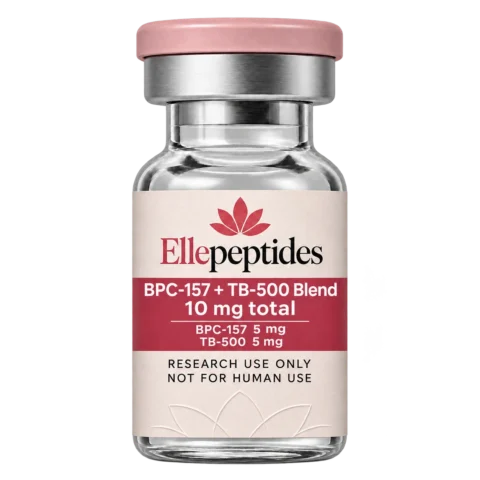
BPC-157 + TB-500 Blend
The BPC-157 + TB-500 Blend, often nicknamed the Wolverine blend, combines 5 mg of BPC-157 and…
- Peptide Blends
- Research Peptides
-
New in
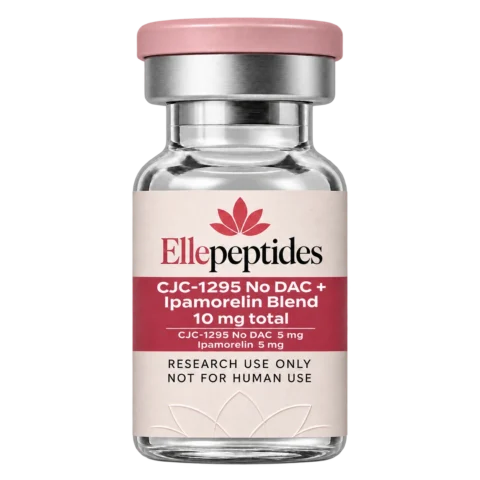
CJC-1295 No DAC + Ipamorelin Blend
This freeze-dried research blend combines 5 mg of CJC-1295 No DAC and 5 mg of ipamorelin…
- Peptide Blends
- Research Peptides
-
New in
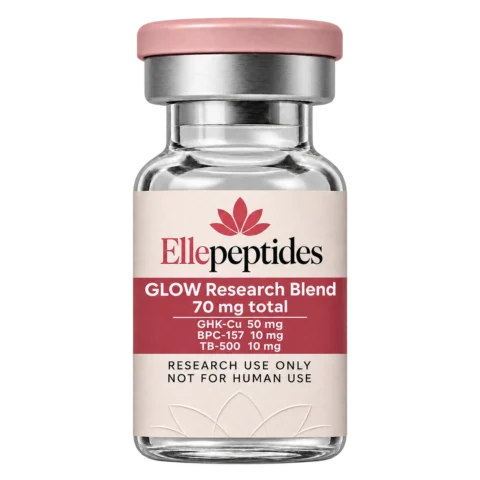
GLOW Research Blend (70 mg)
GLOW is a 70 mg freeze-dried research blend: GHK-Cu 50 mg, BPC-157 10 mg and TB-500…
- Peptide Blends
- Peptides for Women
-
New in
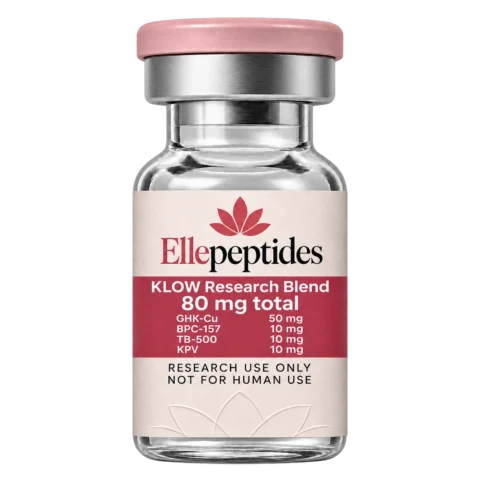
KLOW Research Blend (80 mg)
KLOW is an 80 mg freeze-dried research blend in one vial: GHK-Cu 50 mg, BPC-157 10…
- Peptide Blends
- Research Peptides
-
New in
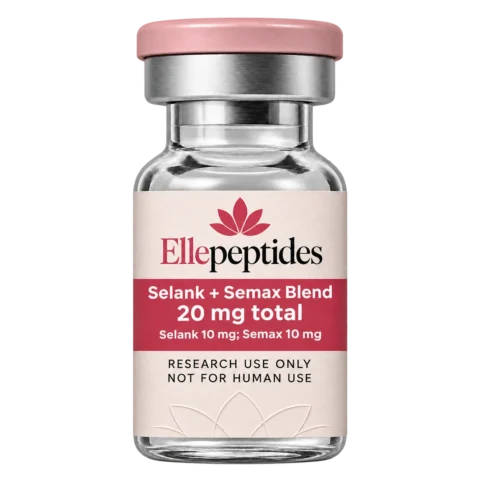
Selank + Semax Blend
The Selank + Semax Blend holds 10 mg of Selank and 10 mg of Semax in…
- Peptide Blends
- Research Peptides
What is a peptide blend?
A peptide blend is one vial holding two or more distinct peptides in proportions set at the time of filling. The headline figure is a sum: GLOW’s 70 mg, for instance, is 50 mg of GHK-Cu plus 10 mg each of BPC-157 and TB-500, not 70 mg of any one compound. A mixture has no single sequence, formula or molar mass, so each component has to be identified on its own terms.
Peptide blends compared
| Blend | Components per vial | Total | Component research areas | Blend-level evidence | Listed price (USD) |
|---|---|---|---|---|---|
| BPC-157 + TB-500 (Wolverine) | BPC-157 5 mg + TB-500 5 mg | 10 mg | Tendon-cell migration; actin binding | One rat Achilles study: the combination did not outperform single treatments (Biçer et al., 2026) | $82.50 |
| GLOW Research Blend | GHK-Cu 50 mg + BPC-157 10 mg + TB-500 10 mg | 70 mg | Matrix biology; tendon cells; actin binding | None identified | $150.00 |
| KLOW Research Blend | GHK-Cu 50 mg + BPC-157 10 mg + TB-500 10 mg + KPV 10 mg | 80 mg | As GLOW, plus inflammatory signaling | None identified | $174.38 |
| CJC-1295 No DAC + Ipamorelin | CJC-1295 No DAC 5 mg + ipamorelin 5 mg | 10 mg | GHRH-receptor and ghrelin-receptor signaling | None identified | $90.00 |
| Selank + Semax | Selank 10 mg + Semax 10 mg | 20 mg | Tuftsin-analogue and ACTH-fragment research | Imaging study of separate preparations only (Panikratova et al., 2020) | $82.50 |
Prices are those listed at the time of writing; each product page shows the current price.
GLOW vs KLOW
The two share a base: GHK-Cu 50 mg, BPC-157 10 mg and TB-500 10 mg. KLOW adds 10 mg of KPV, raising the total from 70 mg to 80 mg. That addition brings in a separate research line, since KPV experiments linked PepT1-mediated uptake to reduced inflammatory signaling in cell models and lower inflammation indices in mouse colitis (Dalmasso et al., 2008). GHK-Cu, the largest component in both, is mostly studied for collagen and matrix responses in fibroblasts (Maquart et al., 1988). No study shows that either blend outperforms the other.
Blends vs separate vials
A blend offers one vial and one preparation step, with the ratio already decided. Separate vials allow each component to be varied, omitted or matched to a published protocol, which matters because most studies tested single compounds. Blends also multiply identity questions: the TB-500 name, for example, has covered a seven-residue fragment in at least one analyzed product (Esposito et al., 2012), and the CJC-1295 literature mostly concerns the albumin-binding DAC form rather than No DAC material (Jetté et al., 2005).
The arithmetic is straightforward. Each component’s concentration equals its own mass divided by the solvent volume: a GLOW vial brought to 2 mL contains GHK-Cu at 25 mg/mL and BPC-157 and TB-500 at 5 mg/mL each. The peptide calculator handles single compounds, so run it once per component.
Are peptide blends studied as blends?
Rarely. Almost all of the evidence cited on blend pages concerns individual components. The clearest exception is a 2026 study in 32 male rats with repaired Achilles tendons, where a BPC-157 and thymosin beta-4 combination improved one histology score but did not beat either treatment alone. A retrospective knee-pain review included four people who had received both peptides, without a control group (Lee and Padgett, 2021). For Selank and Semax, the imaging study gave the compounds to separate groups. Claims of synergy for any of these mixtures are not supported by published data.
Peptide blends FAQ
What is a peptide blend?
It is a single vial containing two or more research peptides in a fixed ratio. The total milligram figure is the sum of the components, so a 10 mg blend of two peptides at 5 mg each contains 5 mg of each. Ellepeptides lists every component amount on the product page.
What is the difference between GLOW and KLOW?
GLOW contains GHK-Cu 50 mg, BPC-157 10 mg and TB-500 10 mg, for 70 mg total. KLOW contains the same three amounts plus KPV 10 mg, for 80 mg total. The extra component adds inflammation-signaling research to GLOW’s matrix and tissue focus; it does not make KLOW proven to be superior.
Are peptide blends better than separate vials?
Neither format is better in general. A blend is simpler to handle but fixes the ratio, while separate vials allow independent control and closer matching to published single-compound studies. Since blend-level evidence is scarce, separate vials are often easier to align with the literature.
Are peptide blends studied as blends?
Mostly not. Published work generally tests one component at a time. One rat tendon study compared a BPC-157 and thymosin beta-4 combination with each alone and found no advantage for the combination. No study of the exact GLOW, KLOW, CJC-1295 No DAC + ipamorelin or Selank + Semax mixtures was identified.
What is in the GLOW peptide blend?
GLOW lists three components in one 70 mg vial: GHK-Cu copper peptide 50 mg, BPC-157 10 mg and TB-500 10 mg. GHK-Cu is studied for collagen and matrix responses, BPC-157 for tendon-cell migration and TB-500 under its thymosin beta-4 association. The mixture itself has not been studied.
How do I work out each component’s concentration in a blend?
Divide each component’s mass by the total solvent volume. For a KLOW vial in 4 mL, GHK-Cu is 12.5 mg/mL and BPC-157, TB-500 and KPV are 2.5 mg/mL each. The peptide calculator performs the same division for any single mass and volume you enter.
Related categories: Healing & recovery peptides · Muscle & performance peptides · Nootropic peptides · All research peptides. For laboratory research only. Not for human or veterinary use.