
-
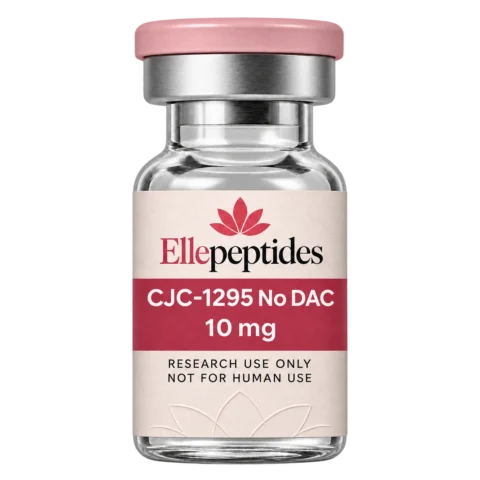
CJC-1295 No DAC
CJC-1295 No DAC is a modified GRF(1–29) fragment with four amino-acid substitutions and no albumin-binding DAC…
- Research Peptides
- Strength & Performance
-
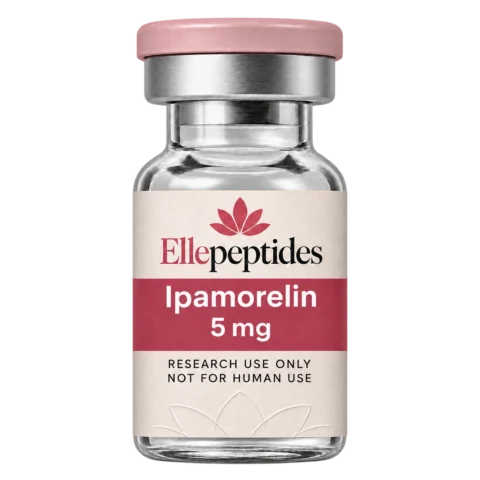
Ipamorelin
Ipamorelin is a synthetic five-residue peptide studied as a selective growth-hormone secretagogue acting at the ghrelin…
- Research Peptides
- Strength & Performance
-
New in
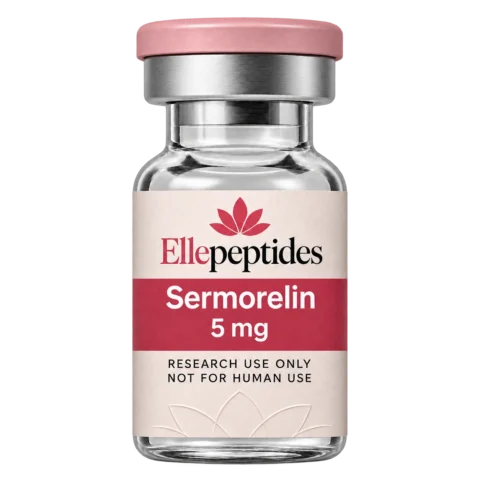
Sermorelin
Sermorelin is the amidated 29-amino-acid fragment of growth-hormone-releasing hormone, GHRH(1–29)-NH2, studied for growth-hormone release in children…
- Research Peptides
- Strength & Performance
-
New in
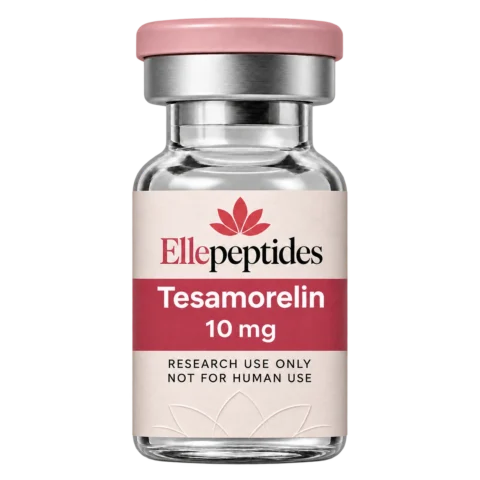
Tesamorelin
Tesamorelin is a synthetic analogue of growth-hormone-releasing hormone (GHRH), studied mainly for visceral and liver fat…
- Research Peptides
- Strength & Performance
What are growth-hormone secretagogue peptides?
A secretagogue prompts a gland to release its own hormone. Two families appear here. GHRH analogues, namely sermorelin, tesamorelin and CJC-1295, act like growth-hormone-releasing hormone at the pituitary; tesamorelin, for example, stimulates endogenous, pulsatile GH secretion. Ipamorelin instead acts at the ghrelin receptor, and its original experiments measured hormone release in rat pituitary cells, rats and pigs (Raun et al., 1998). None of these peptides is growth hormone itself.
Muscle and performance peptides compared
| Compound | Class | Key human finding | Studies involving women | Sizes and listed price |
|---|---|---|---|---|
| Ipamorelin | Synthetic pentapeptide; ghrelin-receptor secretagogue | Healthy men: terminal half-life about 2 hours, single GH peak near 40 minutes (Gobburu et al., 1999) | Bowel-surgery trial indexed for both sexes; no women-specific result (Beck et al., 2014) | 5, 10 mg · from $40.00 |
| CJC-1295 No DAC | GHRH analogue without the albumin-binding DAC group | Published trials used the long-acting DAC form, not No DAC (Teichman et al., 2006) | Women and men in those DAC-form trials | 10 mg · $110.00 |
| Tesamorelin | 44-amino-acid modified GHRH analogue | 412 people with HIV-associated abdominal fat: visceral fat −15.2% vs +5.0% at 26 weeks (Falutz et al., 2007) | 21 women among 60 adults in a 12-month trial (Makimura et al., 2012) | 5, 10, 20 mg · from $68.35 |
| Sermorelin | GHRH(1–29)-NH2, 29 residues | 11 older men: more nocturnal GH, unchanged IGF-I and body composition (Vittone et al., 1997) | 54 women among 89 completers in a cognition study (Vitiello et al., 2006) | 5, 10 mg · from $60.00 |
| CJC-1295 No DAC + Ipamorelin Blend | 5 mg CJC-1295 No DAC + 5 mg ipamorelin | Component studies only | None for the blend | 10 mg total · $90.00 |
CJC-1295 vs ipamorelin
They use different receptors: CJC-1295 is a GHRH analogue, while ipamorelin is a ghrelin-receptor agonist. The CJC-1295 literature also hinges on a structural detail. Its developers added an albumin-binding modification, the DAC group, to make a longer-lasting compound (Jetté et al., 2005). In healthy men, that long-acting form raised mean and trough GH without changing pulse frequency or size (Ionescu and Frohman, 2006). The catalog’s No DAC material lacks that modification, so those persistence and pulse results cannot be assigned to it.
Tesamorelin vs sermorelin
Sermorelin is the amidated first 29 residues of GHRH; tesamorelin is a modified 44-residue analogue with the most clinical data in this category. A 2019 trial of 61 adults with HIV-associated fatty liver found a 4.1-percentage-point adjusted difference in hepatic fat fraction favoring tesamorelin (Stanley et al., 2019). Sermorelin’s clinical record is older: an open-label study of 110 children with GH deficiency reported faster height velocity (Thorner et al., 1996), and a 1994 comparison found that the unmodified fragment disappeared faster than a D-Ala2 analogue (Soule et al., 1994).
Do GH peptides build muscle? What studies measured
The studies cited across these product pages measured hormones, fat depots and cognition far more often than muscle. In Vittone’s six-week study of 11 older men, sermorelin raised nocturnal GH, but IGF-I and body composition did not change, and only two of six strength measures improved. Tesamorelin reduced visceral fat without significant body-weight change in the Makimura trial. None of the reviewed trials showed muscle-mass gains in healthy adults.
Women in growth-hormone peptide research
Women took part in several trials, usually as a minority. Both Teichman CJC-1295 trials enrolled women and men, though with the DAC form. Makimura’s tesamorelin trial included 21 women among 60 adults with abdominal obesity, without a women-specific estimate, while the earlier HIV visceral-fat trial was mostly men. Vitiello’s sermorelin study had 54 women among 89 completers. For ipamorelin, the bone work used adult female rats (Svensson et al., 2000).
Muscle and performance peptides FAQ
What are GH secretagogue peptides?
They are peptides that stimulate the pituitary to release its own growth hormone. GHRH analogues such as sermorelin, tesamorelin and CJC-1295 mimic growth-hormone-releasing hormone, while ipamorelin acts at the ghrelin receptor. Studies measure GH and IGF-I responses rather than administering growth hormone directly.
What is the difference between CJC-1295 and ipamorelin?
CJC-1295 is a GHRH analogue; ipamorelin is a pentapeptide that acts at the ghrelin receptor. They stimulate GH release through separate pathways. Most published CJC-1295 trials used the long-acting DAC form, whereas Ellepeptides lists CJC-1295 No DAC, so those trial results do not transfer directly.
What is the difference between tesamorelin and sermorelin?
Both are GHRH analogues. Sermorelin is the 29-residue amidated GHRH fragment, while tesamorelin is a modified 44-residue analogue. Tesamorelin has larger randomized trials, mainly in people with HIV-associated abdominal or liver fat; sermorelin’s evidence includes children with GH deficiency and small studies in older adults.
Can women study peptides for muscle research?
Women can be included, but sex-specific muscle data are missing from these studies. Women participated in CJC-1295, tesamorelin and sermorelin trials that measured hormones, fat or cognition, and an ipamorelin experiment found larger bone dimensions in female rats without a change in cortical bone density.
What does No DAC mean in CJC-1295 No DAC?
DAC refers to an albumin-binding chemical group added to CJC-1295 to prolong its persistence in blood. No DAC material lacks that group. Because the best-known human CJC-1295 trials used the DAC form, their half-life and GH-pulse findings should not be applied to No DAC material.
Is the CJC-1295 No DAC + ipamorelin blend better than separate vials?
No evidence shows that. The blend combines 5 mg of each peptide in one vial, which fixes their ratio, while separate vials allow independent control. No study of this exact mixture was identified, and two signaling routes do not by themselves prove a larger or more useful response.
Related categories: Peptide blends · Peptides for women · All research peptides. For laboratory research only. Not for human or veterinary use.