
-
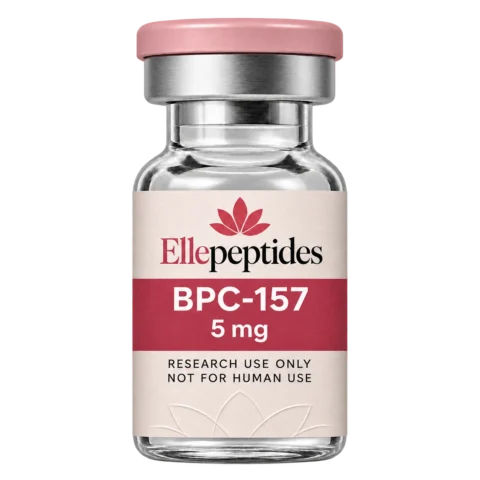
BPC-157
BPC-157 is a synthetic 15-amino-acid peptide studied in tendon-cell and blood-vessel research models. Ellepeptides supplies it…
- Healing & Recovery
- Research Peptides
-
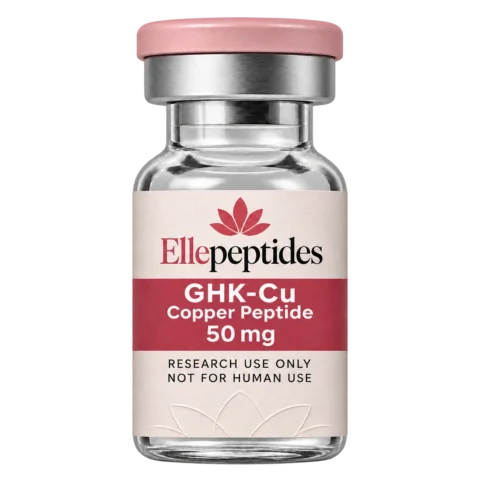
GHK-Cu Copper Peptide
GHK-Cu, the copper(II) complex of the tripeptide glycine–histidine–lysine, supplied as freeze-dried research material in 50 mg…
- Healing & Recovery
- Peptides for Women
-
New in
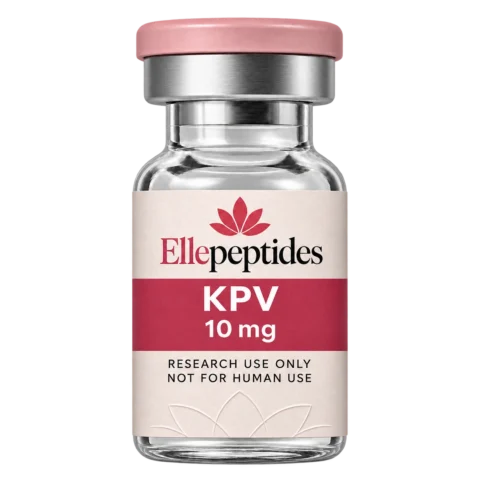
KPV
KPV is a synthetic lysine–proline–valine tripeptide, the C-terminal fragment of alpha-MSH, studied in intestinal cell and…
- Healing & Recovery
- Research Peptides
-
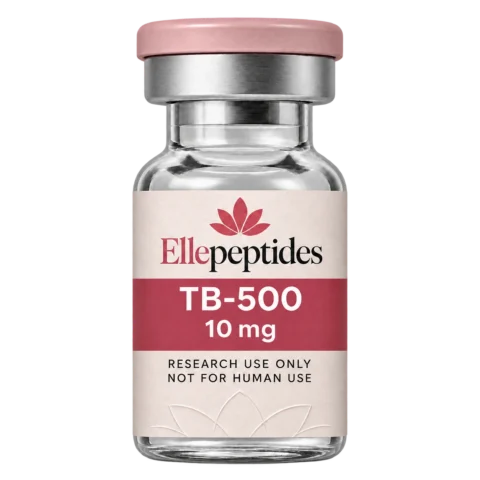
TB-500
TB-500 is a research peptide name linked to thymosin beta-4, offered as freeze-dried (lyophilized) powder in…
- Healing & Recovery
- Research Peptides
What “healing peptides” means in research
“Healing peptides” is a shopping term. In the literature, these compounds are examined in specific repair models: how fibroblasts migrate, how the extracellular matrix is built and broken down, how wounds close in rodents and how inflammatory signaling changes in cell lines. Most of that evidence is cellular or animal, and the human reports are small, uncontrolled or used different formulations.
Healing and recovery peptides compared
| Product | What it is | Key laboratory finding | Studies involving women | Sizes and listed price |
|---|---|---|---|---|
| BPC-157 | 15-amino-acid synthetic peptide | Rat tendon fibroblasts: more cell migration and FAK–paxillin signaling, no direct rise in proliferation (Chang et al., 2011) | 12 women with interstitial cystitis in an uncontrolled chart review (2024) | 5, 10 mg · from $60.00 |
| TB-500 | Name linked to thymosin beta-4; exact form needs documentation | Full thymosin beta-4: faster re-epithelialization and more collagen in rat skin wounds (Malinda et al., 1999) | Dry-eye trial with 54 women among 72, using thymosin beta-4 eye drops (Sosne and Ousler, 2015) | 5, 10 mg · from $52.50 |
| GHK-Cu Copper Peptide | Copper(II) complex of Gly–His–Lys | Fibroblast cultures: increased collagen synthesis (Maquart et al., 1988) | 40 women aged 40–65 tested a formulated cream (Badenhorst et al., 2016) | 50, 100 mg · from $50.00 |
| KPV | Lys–Pro–Val, the C-terminal tripeptide of alpha-MSH | Intestinal cells and mouse colitis: PepT1 uptake, lower NF-κB signaling and inflammation indices (Dalmasso et al., 2008) | None identified | 10 mg · $60.00 |
| BPC-157 + TB-500 Blend (Wolverine) | 5 mg + 5 mg in one vial | Rat Achilles repair: the combination did not outperform the single treatments (Biçer et al., 2026) | None for the blend | 10 mg total · $82.50 |
| KLOW Research Blend | GHK-Cu 50 mg + BPC-157, TB-500 and KPV 10 mg each | Component studies only | None for the blend | 80 mg total · $174.38 |
BPC-157 vs TB-500
They are unrelated molecules. BPC-157 is a 15-residue sequence, GEPPPGKPADDAGLV. Beyond the migration findings, tendon fibroblasts from male rats showed increased growth-hormone receptor expression after BPC-157 exposure (Chang et al., 2014), and rat and dog experiments measured an elimination half-life under 30 minutes for the intact peptide (He et al., 2022).
TB-500 is a catalog name. Full-length thymosin beta-4 has 43 residues (Low and Goldstein, 1982) and binds actin monomers, limiting filament assembly (Safer et al., 1991). A 2012 analysis, however, found a seven-residue acetylated fragment in a product labeled TB-500 (Esposito et al., 2012), so results for the full protein cannot be assumed for every TB-500 material.
What is the Wolverine blend?
“Wolverine” is an informal name for BPC-157 combined with TB-500. The Ellepeptides version holds 5 mg of each in one vial. Direct evidence for the pairing is thin. In a 2026 study of 32 male rats with repaired Achilles tendons, the thymosin group improved load-to-failure, while the combination improved one histology score without beating either single treatment. A retrospective knee-pain review included four patients who had received both; three reported improvement, but there was no control group (Lee and Padgett, 2021). KLOW adds GHK-Cu and KPV to the same two components.
KPV and GHK-Cu: inflammation and matrix research
KPV and BPC-157 answer different questions. KPV, a tripeptide fragment of alpha-MSH, is studied for how it enters intestinal and immune cells through the PepT1 transporter and dampens inflammatory signaling. BPC-157 research centers on tendon-cell movement. GHK-Cu, meanwhile, is a matrix-turnover compound: fibroblasts exposed to it raised MMP-2 together with its inhibitors TIMP-1 and TIMP-2 (Simeon et al., 2000), pointing to regulated breakdown as well as synthesis.
Healing peptides FAQ
What are healing peptides?
They are peptides investigated in tissue-repair research, such as BPC-157, TB-500, GHK-Cu and KPV. Studies measure cell migration, collagen and matrix production, wound closure in animals or inflammatory markers in cell lines. The label describes a research interest, not a demonstrated human treatment effect.
What is the difference between BPC-157 and TB-500?
BPC-157 is a 15-amino-acid peptide studied mainly in rat tendon cells. TB-500 is a name associated with thymosin beta-4, an actin-binding protein of 43 residues, though one analyzed TB-500 product contained a short fragment instead. Their mechanisms, sequences and evidence bases are separate.
What is the Wolverine peptide blend?
It is a popular name for BPC-157 combined with TB-500. Ellepeptides lists it as a single 10 mg vial with 5 mg of each component. The one controlled animal comparison found that the combination did not outperform either peptide alone, so synergy remains unproven.
Is KPV better than BPC-157?
Neither is “better”; they belong to different research areas. KPV is a three-residue alpha-MSH fragment studied in intestinal inflammation models, including mouse colitis. BPC-157 is studied in tendon-cell migration and survival. No study comparing them head to head was identified.
Is GHK-Cu used in tissue research?
Yes. Fibroblast cultures exposed to GHK-Cu increased collagen synthesis, and a rat wound-chamber experiment found greater accumulation of collagen and other matrix components. Later work showed effects on enzymes that remodel the matrix. Human data mainly concern formulated skin products.
Is TB-500 the same as thymosin beta-4?
Not necessarily. Thymosin beta-4 is a defined 43-residue protein, while TB-500 is a catalog name; one analytical study of a TB-500 product found a seven-residue fragment. Check the molecular form in the documentation for the material you receive before matching it to a published study.
Related categories: Peptide blends · Peptides for skin & hair · All research peptides. For laboratory research only. Not for human or veterinary use.