
No, peptides are not steroids. A peptide is a short chain of amino acids joined by peptide bonds, while a steroid is a fat-like molecule built on four fused carbon rings, and the two usually signal to cells in different ways. The mix-up comes mostly from sport, where some peptides that raise growth hormone are prohibited alongside anabolic steroids.
At a glance
- Peptides are chains of roughly 2 to 50 amino acids. Steroids have 17 carbon atoms arranged in four rings.
- Peptide hormones mostly bind receptors on the cell surface; steroid hormones enter the cell and act on receptors that change gene activity.
- Testosterone weighs 288.42 g/mol; semaglutide, a 31-amino-acid peptide, weighs about 4114 g/mol.
- The World Anti-Doping Agency (WADA) lists anabolic agents under S1 and peptide hormones under S2; GLP-1 compounds such as semaglutide are not listed.
- Estradiol and progesterone are steroids; kisspeptin and oxytocin are peptides.
Research peptides mentioned in this guide
- Tesamorelin: 5, 10 and 20 mg. View research vials
- Sermorelin: 5 and 10 mg. View research vials
- Ipamorelin: 5 and 10 mg. View research vials
- CJC-1295 No DAC: 10 mg. View research vials
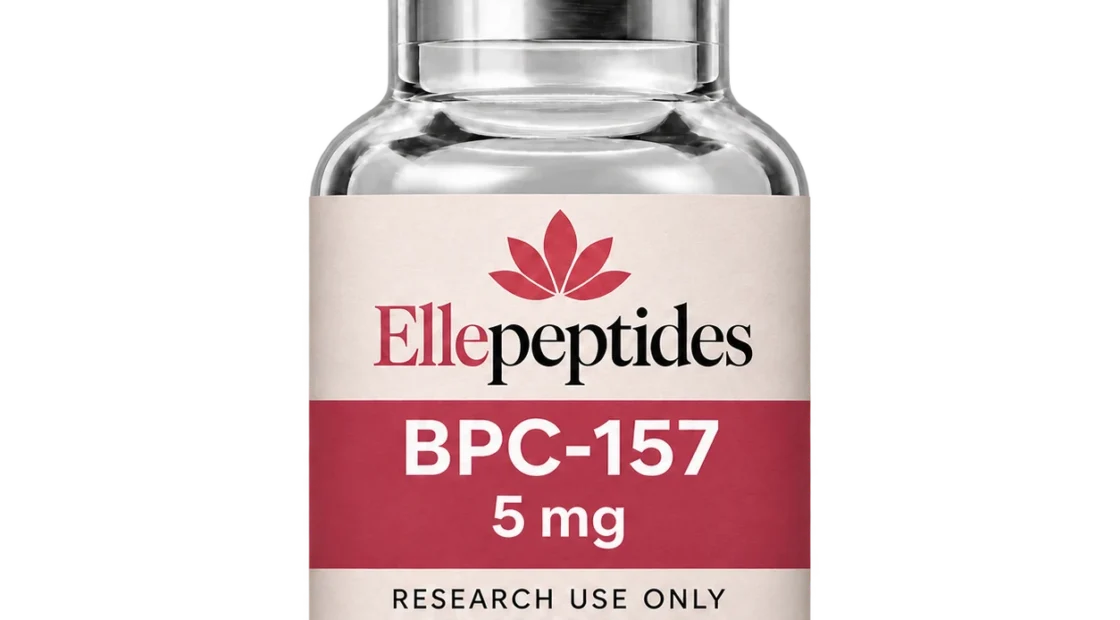
- BPC-157: 5 and 10 mg. View research vials
- Semaglutide: 5, 10, 20 and 30 mg. View research vials
Table of contents
- Are peptides steroids?
- What is a peptide?
- What is a steroid?
- How peptides and steroids signal
- Peptides vs steroids comparison table
- Why people confuse them
- Peptides on the WADA Prohibited List
- Peptides, steroids and women’s hormones
- Frequently Asked Questions
- References
Are peptides steroids? The short chemistry answer
Peptides and steroids belong to different chemical families. A peptide is built from amino acids, the same building blocks as proteins, linked end to end. A steroid is a lipid (a fat-like molecule) built on a fixed four-ring carbon frame, and the body makes its steroid hormones from cholesterol (OpenStax Anatomy and Physiology 2e: hormone classes).
Both families include hormones, which is part of the confusion. “Hormone” describes a job, a chemical messenger carried in the blood, not a structure: oxytocin and insulin are made of amino acids, while testosterone and cortisol are steroids.
What is a peptide?
A peptide is a short chain of amino acids, typically 2 to 50, linked by chemical bonds called peptide bonds. Chains of 51 or more are polypeptides, and proteins are built from one or more polypeptides (NHGRI: peptide definition).
Catalog examples span that range. GHK-Cu is a three-amino-acid peptide bound to copper, first reported in human serum (Pickart and Margolina, 2018: GHK review). Oxytocin has nine amino acids closed into a ring by a disulfide bridge (Di Giglio et al., 2017: oxytocin structure). BPC-157 has 15 (Chang et al., 2014: BPC-157), semaglutide 31 (Lau et al., 2015: semaglutide design) and tesamorelin 44, the full sequence of human growth-hormone-releasing factor with a small chemical cap (FDA, 2025: tesamorelin label).
Many natural peptides break down within minutes: unmodified sermorelin, a 29-amino-acid fragment, had a plasma half-life of 4.3 minutes in healthy men (Soule et al., 1994: GHRH(1–29) kinetics). By contrast, semaglutide’s fatty-acid chain binds albumin and stretches its reported human half-life to about 165 hours (Lau et al., 2015: semaglutide design).
What is a steroid?
Chemists define a steroid by its skeleton: 17 carbon atoms arranged in four rings (Britannica: steroid). The formal name for that frame is cyclopenta[a]phenanthrene, three six-carbon rings joined to one five-carbon ring (IUPAC-IUB, 1989: steroid nomenclature). Side groups on that frame separate one steroid from another.
Steroid hormones are made from cholesterol and do not dissolve in water, so they travel in the blood bound to carrier proteins (OpenStax: hormone classes). Testosterone is C19H28O2 at 288.42 g/mol (KEGG C00535), estradiol C18H24O2 at 272.38 g/mol (KEGG C00951), progesterone C21H30O2 at 314.46 g/mol (KEGG C00410) and cortisol C21H30O5 at 362.46 g/mol (KEGG C00735). Oxytocin, a small peptide hormone, is almost three times heavier, at 1007.2 g/mol.
Anabolic-androgenic steroids are synthetic substances similar to testosterone (NIDA: anabolic steroids). Corticosteroid medicines are also steroids, artificial versions of hormones the body makes, and the NHS points out that they are not the same as anabolic steroids (NHS: steroids).
How do peptides and steroids signal to cells?
Water-soluble hormones, including peptides, cannot diffuse through the fatty cell membrane. They bind a receptor on the cell surface, often one linked to a G protein, which sets off an internal messenger such as cyclic AMP (cAMP) (OpenStax: hormone receptors). Semaglutide and tirzepatide work this way at the GLP-1 receptor, and cell studies of tirzepatide measured its cAMP signaling directly (Willard et al., 2020: tirzepatide signalling).
Steroid hormones take the inside route. They pass through the membrane, bind a receptor in the cytoplasm or nucleus, and the hormone-receptor pair attaches to DNA to change which genes are transcribed (OpenStax). Steroid effects therefore run through gene expression, while peptide effects start at the cell surface.
Growth-hormone-releasing peptides follow the peptide pattern. Tesamorelin and sermorelin bind the GHRH receptor on pituitary cells, which then release the body’s own growth hormone, while ipamorelin uses the ghrelin receptor (Raun et al., 1998: ipamorelin). They signal the pituitary from outside the cell.
Peptides vs steroids: side-by-side comparison
| Feature | Peptides | Steroids |
|---|---|---|
| Building blocks | Amino acids joined by peptide bonds | Four fused carbon rings (17 carbons), made from cholesterol in the body |
| Typical size | 2 to 50 amino acids; oxytocin 1007.2 g/mol, semaglutide about 4114 g/mol | About 270 to 365 g/mol for the hormones in this guide |
| Water solubility | Water-soluble (hydrophilic) | Fat-soluble; carried in blood by transport proteins |
| Where the receptor sits | Cell surface (for example GLP-1, GHRH and ghrelin receptors) | Inside the cell, in the cytoplasm or nucleus |
| How the signal works | Second messengers such as cAMP | Direct changes in gene transcription |
| Hormone examples | Oxytocin, kisspeptin, GLP-1, insulin | Testosterone, estradiol, progesterone, cortisol |
| Research examples | Semaglutide, tesamorelin, BPC-157, GHK-Cu | Nandrolone, synthetic corticosteroids |
| WADA class (2026 list) | S2 for many peptide hormones; BPC-157 named in S0; GLP-1 compounds not listed | S1 anabolic agents (at all times); S9 glucocorticoids (in competition) |
Same job title (“hormone”), different chemistry, receptors and route into the cell.
Why do people confuse peptides with steroids?
Growth hormone is the biggest reason. Tesamorelin, sermorelin, CJC-1295 No DAC and ipamorelin are growth-hormone secretagogues, meaning they prompt the pituitary to release its own growth hormone, and IGF-I rises downstream (Makimura et al., 2012: tesamorelin). Growth-hormone research overlaps with body composition: in a 26-week trial of 412 adults with HIV-associated abdominal fat, tesamorelin cut visceral fat by 15.2% while it rose 5.0% on placebo (Falutz et al., 2007: tesamorelin).
Sport rules reinforce the link. WADA prohibits anabolic agents and peptide hormones at all times, in neighboring sections of the same list. “Anabolic” simply means growth-stimulating (Britannica: steroid), and the label is often applied loosely to anything muscle-related.
Biology adds a third reason: some peptides sit upstream of steroid production. Kisspeptin activates the KISS1R receptor upstream of GnRH, which drives the pituitary hormones LH and FSH (George et al., 2011: kisspeptin). WADA groups kisspeptin, LH and GnRH as “testosterone-stimulating peptides in males” (WADA, 2026: Prohibited List). A peptide can influence steroid levels without being a steroid.
Which peptides are on the WADA Prohibited List?
The 2026 Prohibited List, in force since 1 January 2026, keeps steroids and peptides in separate classes (WADA, 2026: Prohibited List). S1, anabolic agents, names testosterone and nandrolone. S2, peptide hormones, growth factors, related substances and mimetics, names many research peptides. Both classes are prohibited at all times, in and out of competition, while glucocorticoids sit in S9 and are prohibited in competition.
- GHRH and its analogues (S2.2.4): CJC-1293, CJC-1295, sermorelin and tesamorelin
- Growth hormone secretagogues (S2.2.4): including ipamorelin, ibutamoren (MK-677) and lenomorelin (ghrelin)
- GH-releasing peptides (S2.2.4): GHRP-1 to GHRP-6, alexamorelin and examorelin (hexarelin)
- Growth hormone fragments (S2.2.3): AOD-9604 and hGH 176-191
- Testosterone-stimulating peptides in males (S2.2.1): including LH, chorionic gonadotrophin, GnRH and its agonist analogues, and kisspeptin and its agonist analogues
- Thymosin-β4 and its derivatives (S2.3): for example TB-500
- S0, the catch-all class: BPC-157 is named as an example
GLP-1 receptor agonists such as semaglutide and tirzepatide are not on the 2026 list. The 2027 list, adopted in September 2026 and taking effect on 1 January 2027, leaves their status unchanged pending more data (World Rugby, 2026: 2027 list summary).
The Canadian Centre for Ethics in Sport (CCES), which runs the Canadian Anti-Doping Program, points athletes to Global DRO for substance lookups (CCES: Prohibited List notice). The list is updated every January, so check the current version.
Peptides, steroids and women’s hormone research
The main female sex hormones are steroids. Estradiol (C18H24O2) and progesterone (C21H30O2) share the four-ring frame with testosterone (KEGG C00951; KEGG C00410). The signals that control their release are peptides: kisspeptin works upstream of GnRH, which drives LH and FSH (George et al., 2011: kisspeptin).
The menstrual cycle shapes that chain: in 31 women given kisspeptin-10, an immediate LH pulse appeared in all 3 preovulatory and all 14 midluteal participants but in only 5 of 10 in the early follicular phase (Chan et al., 2012: kisspeptin-10 in women). Oxytocin, the nine-amino-acid peptide best known from labor, is another key women’s hormone that is a peptide (Pitocin prescribing information).
In a six-month GHRH trial in adults aged 60 to 85, 54 of the 89 participants who finished were women, split between estrogen users and non-users, and IGF-I rose 33.8% versus 0.8% on placebo (Vitiello et al., 2006: GHRH in older adults). The two core tesamorelin trials, by contrast, were 86% and 84% men (FDA, 2025: tesamorelin label).
Anabolic steroids have documented effects in women: NIDA lists masculinizing changes such as a deeper voice, decreased breast size and excess body hair (NIDA: anabolic steroids). On the sport side, WADA’s testosterone-stimulating peptide group (S2.2.1) applies to males only, while the growth-hormone groups carry no such limit. See our peptides for women hub for more.
Frequently Asked Questions
Are peptides the same as steroids?
No. A peptide is a chain of roughly 2 to 50 amino acids, while a steroid has 17 carbon atoms arranged in four fused rings. Peptides mostly bind receptors on the cell surface; steroid hormones enter the cell and change gene activity. To check any compound, look up its chemical class, not its use.
Is BPC-157 a steroid?
No. BPC-157 is a synthetic peptide of 15 amino acids, derived from a protein first described in human gastric juice, with no steroid rings. WADA names it in S0, its catch-all class, separate from S1 anabolic agents. Most of its research comes from rat and cell models.
Is semaglutide a steroid?
No. Semaglutide is a 31-amino-acid peptide with a fatty-acid chain; at about 4114 g/mol it is more than 14 times the mass of testosterone. It acts on the GLP-1 receptor on the cell surface. GLP-1 compounds are not on the 2026 WADA list, and the 2027 list leaves that unchanged.
Are growth hormone peptides like tesamorelin and ipamorelin steroids?
No. Tesamorelin is a 44-amino-acid GHRH analogue, and ipamorelin is a five-amino-acid peptide acting on the ghrelin receptor; both prompt the pituitary to release its own growth hormone. They are still prohibited in sport: WADA names both under S2.2.4, which applies at all times.
Which peptides are banned in sport?
WADA’s 2026 list names, among others, CJC-1295, sermorelin, tesamorelin, ipamorelin, GHRP-2, GHRP-6, AOD-9604, TB-500 and BPC-157, and the 2027 list takes effect on January 1, 2027. The CCES directs athletes to Global DRO, the place to check a specific substance.
Can a peptide change estrogen or testosterone levels?
Some work further up the chain. Kisspeptin acts upstream of GnRH, which drives LH and FSH, and in one study kisspeptin-10 triggered an immediate LH pulse in all 14 midluteal women tested. WADA lists kisspeptin, LH and GnRH as “testosterone-stimulating peptides in males”. The peptide changes the signal; it is not a steroid itself.
Are corticosteroids the same as anabolic steroids?
No. Both are steroids, but corticosteroid medicines are artificial versions of body hormones such as cortisol (C21H30O5), called hydrocortisone in medicine, and the NHS states they are not anabolic steroids. WADA prohibits anabolic agents (S1) at all times and glucocorticoids (S9) in competition.
Are estrogen and progesterone steroids?
Yes. Estradiol (C18H24O2, 272.38 g/mol) and progesterone (C21H30O2, 314.46 g/mol) are built on the four-ring steroid frame and act mainly through receptors inside the cell. The hormones that control their release, LH, FSH and upstream kisspeptin, are peptides or proteins.
Is GHK-Cu a steroid?
No. GHK-Cu is the copper complex of glycine, histidine and lysine, a peptide of only three amino acids first reported in human serum. It is studied mainly in fibroblast, wound-model and skin research. Ellepeptides lists it as freeze-dried research material in 50 mg and 100 mg vials.
Does Ellepeptides sell steroids?
No. The catalog lists research peptides, peptide blends, a few non-peptide compounds such as NAD+ and 5-Amino-1MQ, peptide skincare and lab supplies, and no steroids. Orders ship to addresses within the United States, with free shipping over $200 after coupons.
References
- NHGRI. Peptide, genetics glossary. genome.gov
- Encyclopaedia Britannica. Steroid. britannica.com
- IUPAC-IUB (1989). Steroid nomenclature, rule 3S-1.0. iupac.qmul.ac.uk
- OpenStax. Anatomy and Physiology 2e, section 17.2: Hormones. openstax.org
- KEGG COMPOUND records: testosterone C00535, estradiol C00951, progesterone C00410, cortisol C00735
- NIDA. Anabolic steroids DrugFacts. nida.nih.gov
- NHS. Steroids. nhs.uk
- Pickart and Margolina (2018). GHK-Cu review. MDPI
- Di Giglio et al. (2017). Oxytocin-family structural comparison. Sci Rep. Nature
- Pitocin (oxytocin) US prescribing information. DailyMed
- Chang et al. (2014). BPC 157 and growth hormone receptor expression in tendon fibroblasts. Molecules. PMC6271067
- Lau et al. (2015). Semaglutide design and half-life. J Med Chem. PubMed 26308095
- US FDA (2025). EGRIFTA WR (tesamorelin) prescribing information. FDA label (PDF)
- Soule et al. (1994). D-Ala2 and GHRH(1–29) half-life in men. PubMed 7962295
- Raun et al. (1998). Ipamorelin, the first selective GH secretagogue. PubMed 9849822
- Willard et al. (2020). Tirzepatide signaling at the GLP-1 receptor. JCI Insight
- Makimura et al. (2012). Tesamorelin in abdominal obesity. PMC3513535
- Falutz et al. (2007). Tesamorelin and visceral fat in HIV. PubMed 18057338
- George et al. (2011). Kisspeptin-10 and LH in men. PubMed 21632807
- Chan et al. (2012). Kisspeptin in women across the cycle. JCEM. PubMed 22577171
- Vitiello et al. (2006). GHRH and cognition in aging. Author PDF
- WADA (2025). 2026 Prohibited List. WADA (PDF)
- World Rugby (2026). WADA publishes 2027 Prohibited List. world.rugby
- CCES. Prohibited List notice and Global DRO. cces.ca
Explore the research catalog. Browse the full research peptide catalogue and the muscle and performance collection, or see the growth-hormone peptides tesamorelin, sermorelin, ipamorelin and the CJC-1295 No DAC + Ipamorelin Blend. For weight-management compounds, read our peptides for weight loss research guide. For laboratory research only. Not for human or veterinary use.