
Peptide Dosing Calculator

Accurately calculate your peptide dosage and reconstitution with confidence. Get precise measurements and reliable results every time.

  • Research-backed Evidence based guidance
  • Accurate results Precision you can trust
  • Easy to use Simple, intuitive tools
  • Private & secure Your data stays private

Peptide calculator

Quick fill — select a peptide
BPC-157
Semaglutide
Tirzepatide
Retatrutide
Cagrilintide
TB-500
CJC-1295
Ipamorelin
Sermorelin
Tesamorelin
GHK-Cu
MOTS-c
NAD+
Selank
Semax
Melanotan II

Syringe details

Vial details

Amount desired

Draw 10 units

Important: research use only. This tool does not give medical advice.

Preparation & dosage guide

How to use the calculator

For an accurate research dose, work through the tool on the left in this order:

  • Syringe type: Pick your syringe size — U-100 for a standard insulin barrel.
  • Vial details: Enter the bacteriostatic water you added to the vial, commonly 2.0 mL or 2.5 mL.
  • Peptide mass: Enter the total milligrams in the vial, for example 5 mg or 10 mg.
  • Desired dose: Enter your target dose in micrograms.
  • The result: The “Draw” panel updates as you type with the units — and tick marks — to pull into the syringe.

Reconstitution instructions

  • Sanitise: Wipe the rubber stopper of both the water and the peptide vial with an alcohol swab.
  • Mix gently: Inject the water slowly, aiming the stream at the side of the glass rather than straight onto the powder.
  • Do not shake: Swirl until the powder has dissolved. Peptides are fragile molecular chains and shaking damages them.
  • Then refrigerate: Once reconstituted, keep the vial refrigerated and out of direct sunlight and heat.

Lyophilized vs. reconstituted
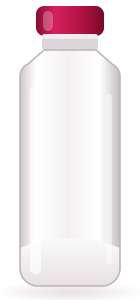
Lyophilized peptide vial

Lyophilized (powder)

  • Stable for long-term storage
  • Requires bacteriostatic water
  • Store refrigerated or frozen

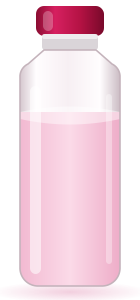
Reconstituted peptide vial

Reconstituted (solution)

  • Ready for accurate dosing
  • Keep refrigerated at all times
  • Use within the recommended window

Peptide reconstitution & laboratory FAQ

One milligram equals 1,000 micrograms. A 5 mg vial therefore holds 5,000 mcg, which is enough for twenty 250 mcg research doses.

Most protocols use 1.0 mL to 3.0 mL. More water lowers the concentration and makes the draw larger, which is easier to measure accurately on a U-100 syringe.

A U-100 syringe marks 100 units per millilitre; a U-40 marks 40. The same volume reads as a different unit count, so always match the calculator to the barrel you are using.

Bacteriostatic water contains 0.9% benzyl alcohol, which suppresses bacterial growth and lets a reconstituted vial be used across several draws rather than once.

Lyophilized powder is stable refrigerated or frozen and away from light. Once reconstituted, keep the vial refrigerated at all times and use it within the recommended window.

Every calculation assumes the vial holds the stated mass. Third-party testing for purity and potency is what makes that assumption — and the resulting dose — reliable.

  • 200,000+ happy customers
  • Free & discreet delivery
  • No insurance required
  • Free consultation